Dyslexia Assessments
We provide in-house Dyslexia Assessments, carried out via our Educational Psychology-led Assessment service. Assessments can be provided to children aged 8 years and older.
What Is Dyslexia?
Dyslexia is a neurological difference, categorised as a ‘Specific Learning Difficulty.’ Although it primarily affects reading and writing, it does not only affect these skills and many dyslexic people may have difficulty processing and remembering information they see and hear, which can affect learning and the acquisition of literacy skills. Dyslexia can also impact on other areas such as memory, co-ordination or organisational skills.
Each person with dyslexia will experience the condition in a way that is unique to them and as such, each will have their own set of abilities and difficulties.

Information taken from the British Dyslexia Association
The following indicators may suggest that your child has a Specific Learning Difficulty (SpLD) such as Dyslexia. Many young children will display these behaviours and make these mistakes. It is the severity of the behaviour and the length of time it persists which give vital clues to identifying a difficulty such as Dyslexia.
• Difficulty learning nursery rhymes
• Difficulty paying attention, sitting still, listening to stories
• Likes listening to stories but shows no interest in letters or words
• Difficulty learning to sing or recite the alphabet
• A history of slow speech development
• Muddles words e.g. cubumber, flutterby
• Difficulty keeping simple rhythm
• Finds it hard to carry out two or more instructions at one time, (e.g. put the toys in the box, then put it on the shelf) but is fine if tasks are presented in smaller units
• Forgets names of friends, teacher, colours etc.
• Poor auditory discrimination
• Confusion between directional words e.g. up/down
• Family history of dyslexia/reading difficulties
• Difficulty with sequencing e.g. coloured beads, classroom routines
• Substitutes words e.g. “lampshade” for “lamppost”
• Appears not to be listening or paying attention
• Obvious ‘good’ and ‘bad’ days for no apparent reason
Next steps
There is a large body of research linking speech and language difficulties in early childhood to later literacy problems. Identifying potential speech and language problems as early as possible is really important as much can be done before a child starts school to develop their language skills. This will then support their reading development at school.
If you are worried about your child’s speech and language development, speak to your GP or health visitor. If you think your child may be Dyslexic, discuss your concerns with the Special Educational Needs Coordinator (SENCo) in your child’s early years setting. Early help is vital to reduce the chance of loss of confidence and low self-esteem. A child can only be diagnosed with Dyslexia through a Diagnostic Assessment but these are usually only carried out from 8 years old.
Information taken from the British Dyslexia Association
If a child appears to be struggling with spelling, reading, writing or numeracy, how do you know whether these difficulties are potential indications of Dyslexia?
There are some obvious signs such as a ‘spiky’ profile which means that a child has areas of strong ability alongside areas of weakness. You may also have other family members with similar weaknesses. Remember that not all Dyslexic children will display the same weaknesses and abilities.
• Speed of processing: slow spoken and/or written language
• Poor concentration
• Difficulty following instructions
• Forgetting words
Written work
• Poor standard of written work compared with oral ability
• Produces messy work with many crossings out and words tried several times, e.g. wippe, wype, wiep, wipe
• Confused by letters which look similar, particularly b/d, p/g, p/q, n/u, m/w
• Poor handwriting with many ‘reversals’ and badly formed letters
• Spells a word several different ways in one piece of writing
• Makes anagrams of words, e.g. tired for tried, bread for beard
• Produces badly set-out written work, doesn’t stay close to the margin
• Poor pencil grip
• Produces phonetic and bizarre spelling: not age/ability appropriate
• Uses unusual sequencing of letters or words
Reading
• Slow reading progress
• Finds it difficult to blend letters together
• Has difficulty in establishing syllable division or knowing the beginnings and endings of words
• Unusual pronunciation of words
• No expression in reading, and poor comprehension
• Hesitant and laboured reading, especially when reading aloud
• Misses out words when reading, or adds extra words
• Fails to recognise familiar words
• Loses the point of a story being read or written
• Has difficulty in picking out the most important points from a passage
Numeracy
• Confusion with place value e.g. units, tens, hundreds
• Confused by symbols such as + and x signs
• Difficulty remembering anything in a sequential order, e.g. tables, days of the week, the alphabet
Time
• Has difficulty learning to tell the time
• Poor time keeping
• Poor personal organisation
• Difficulty remembering what day of the week it is, their birth date, seasons of the year, months of the year
• Difficulty with concepts – yesterday, today, tomorrow
Skills
• Poor motor skills, leading to weaknesses in speed, control and accuracy of the pencil
• Memory difficulties e.g. for daily routines, self-organisation, rote learning
• Confused by the difference between left and right, up and down, east and west
• Indeterminate hand preference
• Performs unevenly from day to day
Behaviour
• Uses work avoidance tactics, such as sharpening pencils and looking for books
• Seems ‘dreamy’, does not seem to listen
• Easily distracted
• Is the class clown or is disruptive or withdrawn
• Is excessively tired due to amount of concentration and effort required
A cluster of these indicators alongside areas of ability may suggest Dyslexia and further investigation may be required.
Information taken from the British Dyslexia Association
Dyslexia is a combination of abilities as well as difficulties. It is the disparity between them that is often the give-away clue. A Dyslexic learner, despite certain areas of difficulty, may be orally very able and knowledgeable, creative, artistic, or sporting. Alongside these abilities will be a cluster of difficulties – these will be different for every person.
Dyslexia can only be diagnosed through a Diagnostic Assessment. However, there are indicators which can help you to identify a young person who may be Dyslexic.
Written work
• Has a poor standard of written work compared with oral ability
• Has poor handwriting with badly formed letters or has neat handwriting, but writes very slowly
• Produces badly set out or messy written work, with spellings crossed out several times
• Spells the same word differently in one piece of work
• Has difficulty with punctuation and/or grammar
• Confuses upper and lower case letters
• Writes a great deal but ‘loses the thread’
• Writes very little, but to the point
• Has difficulty taking notes in lessons
• Has difficulty with organisation of homework
• Finds tasks difficult to complete on time
• Appears to know more than they can commit to paper
Reading
• Is hesitant and laboured, especially when reading aloud
• Omits, repeats or adds extra words
• Reads at a reasonable rate, but has a low level of comprehension
• Fails to recognise familiar words
• Misses a line or repeats the same line twice
• Loses their place easily/uses a finger or marker to keep the place
• Has difficulty in pin-pointing the main idea in a passage
• Has difficulty using dictionaries, directories, encyclopaedias
Numeracy
• Has difficulty remembering tables and/or basic number sets
• Finds sequencing problematic
• Confuses signs such as x for +
• Can think at a high level in mathematics, but needs a calculator for simple calculations
• Misreads questions that include words
• Finds mental arithmetic at speed very difficult
• Finds memorising formulae difficult
Other areas
• Confuses direction – left/right
• Has difficulty in learning foreign languages
• Has difficulty in finding the name for an object
• Has clear difficulties processing information at speed
• Misunderstands complicated questions
• Finds holding a list of instructions in memory difficult, although can perform all tasks when told individually
Behaviour
• Is disorganised or forgetful e.g. over sports equipment, lessons, homework, appointments
• Is easily distracted. May find it difficult to remain focused on the task
• Is often in the wrong place at the wrong time
• Is excessively tired, due to the amount of concentration and effort required
A cluster of these indicators alongside areas of ability may point to possible Dyslexia and further investigation is recommended.
If you suspect that your child may be dyslexic and would benefit from additional support, then your first step should be to consult your child’s teacher or the school’s Special Educational Needs Coordinator (SENCo) to discuss your concerns. The SENCo may decide to carry out screening tests or checklists to find out more about your child’s areas of strength and challenges, in order to see how best they can be supported in the classroom.
The Assessment Process
Every child is unique, and our Educational Psychology assessments are tailored to your child’s individual strengths, needs and circumstances. While each assessment follows a structured, evidence-based approach, the exact process will vary depending on your child’s age, presenting difficulties and the questions you would like the assessment to answer; for example, whether your child meets the threshold for a diagnosis of dyslexia.
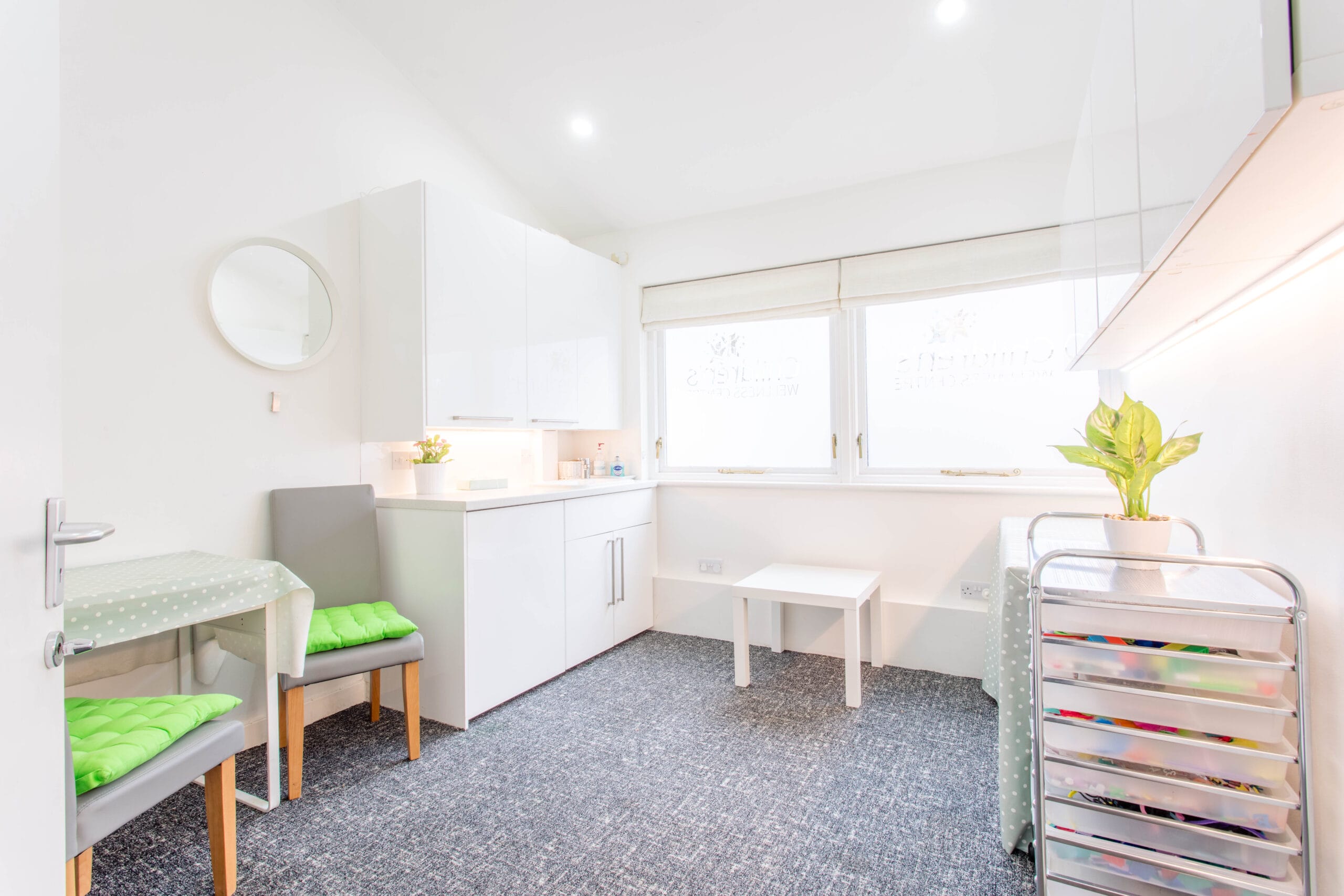
Once you have contacted us, we will arrange an appointment for your child at our clinic. The assessment typically lasts 2 to 2.5 hours. A day or two beforehand, the Educational Psychologist will arrange a telephone consultation with you to gain a better understanding of your child’s developmental history, current concerns and the outcomes you are hoping to achieve.
During the assessment, the Educational Psychologist will use a range of standardised, evidence-based assessment tools and clinical techniques appropriate to your child’s age and individual needs. If dyslexia exploration is your main aim, the tests will be based around this.
Following the assessment, the Educational Psychologist will provide you with verbal feedback to discuss the initial findings and answer any questions you may have. A comprehensive written report will then be provided within 21 working days. The report will summarise the assessment findings, identify your child’s strengths and areas of need, and provide practical, personalised recommendations for parents, carers and educational settings. These recommendations may include teaching strategies, adjustments to the learning environment, behavioural support, targeted interventions and advice on accessing additional support, helping your child to reach their full potential both at home and in school.
Fees
Educational Psychology Assessment – £925
Led by our Educational Psychologist, this assessment can identify and diagnose dyslexia where appropriate, while providing a broader evaluation of your child’s cognitive abilities, learning profile and any other factors that may be affecting their progress.
The fee includes a comprehensive written report and personalised recommendations for supporting your child at home and in school.